
During my first visit to Edinburgh, Scotland, I visited the Royal Yacht Britannia. It was my first time on a a ship of that class.
I’d sailed on oceans and rivers before that, on cruise ships and river ships and on a catamaran. This ship was the first one that sparked curiosity about living and traveling on a ship for any length of time. Who would have imagined I’d be living on a cruise ship just five years later?
It was in service from 1954 to 1997, and was the 83rd such vessel since King Charles II acceded to the throne in 1660. During her service she traveled more than one million nautical miles (1.9 million km) around the world to more than 600 ports in 135 countries. Today it’s a tourist attraction, bringing in more than 300,000 people per year, including us in 2019.
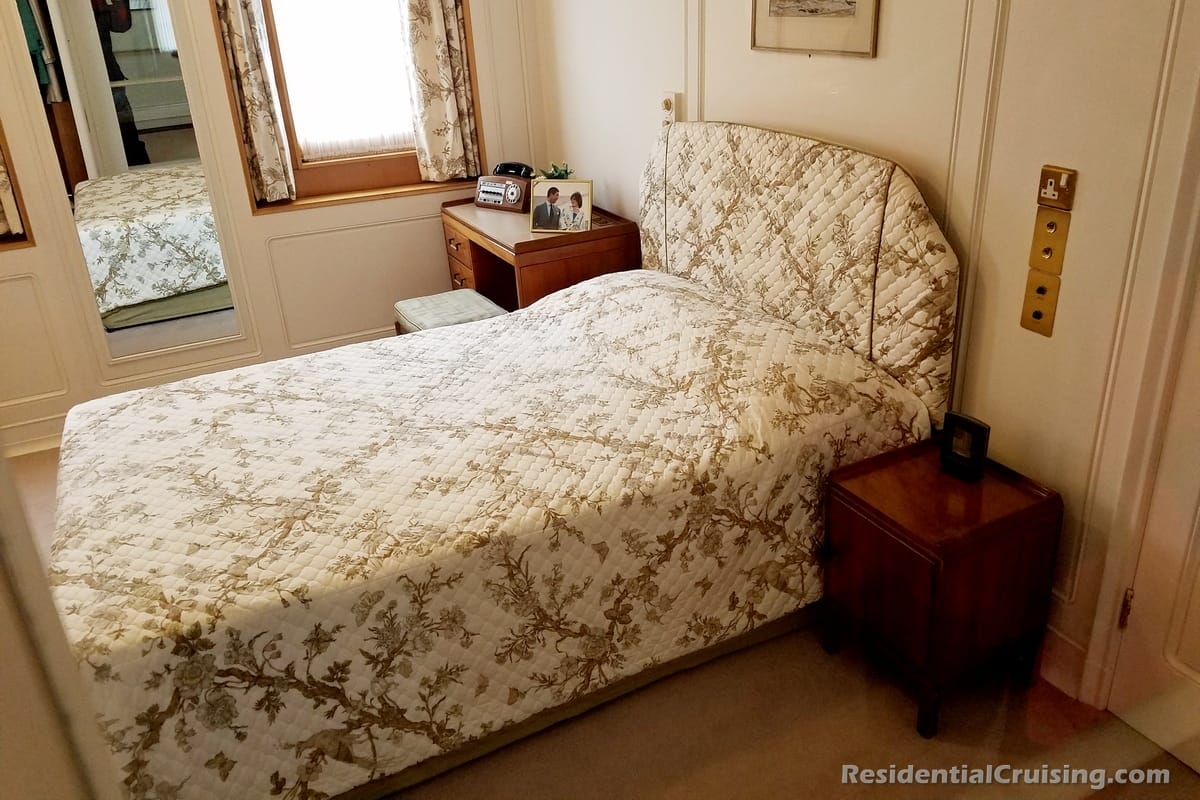
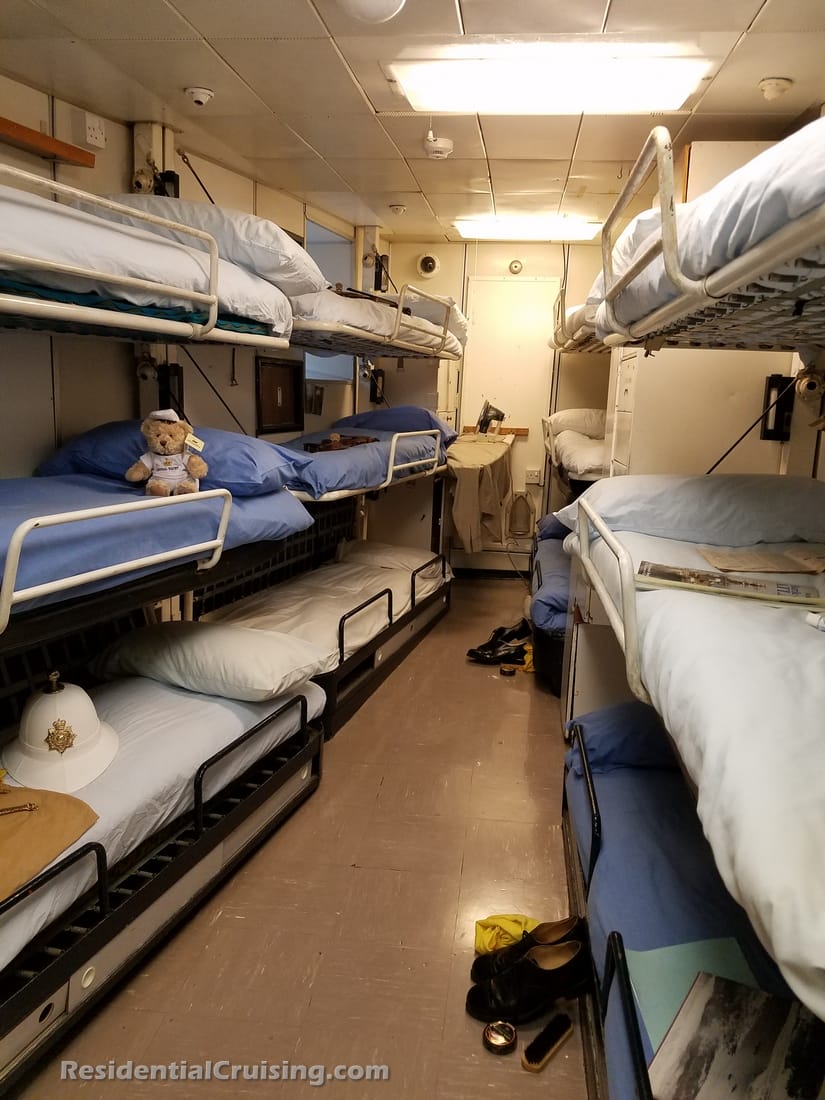
As you would expect, it was well appointed and beautiful. The stories it could tell were tantalizing. The tour guides talked about the furnishings and the stories as we walked through the ship. Talk about an “upstairs/downstairs” life! The crew quarters weren’t the least bit appealing to me, though I’m sure they are luxurious compared to other crew quarters, and the family quarters looked more than comfortable — especially the queen’s.
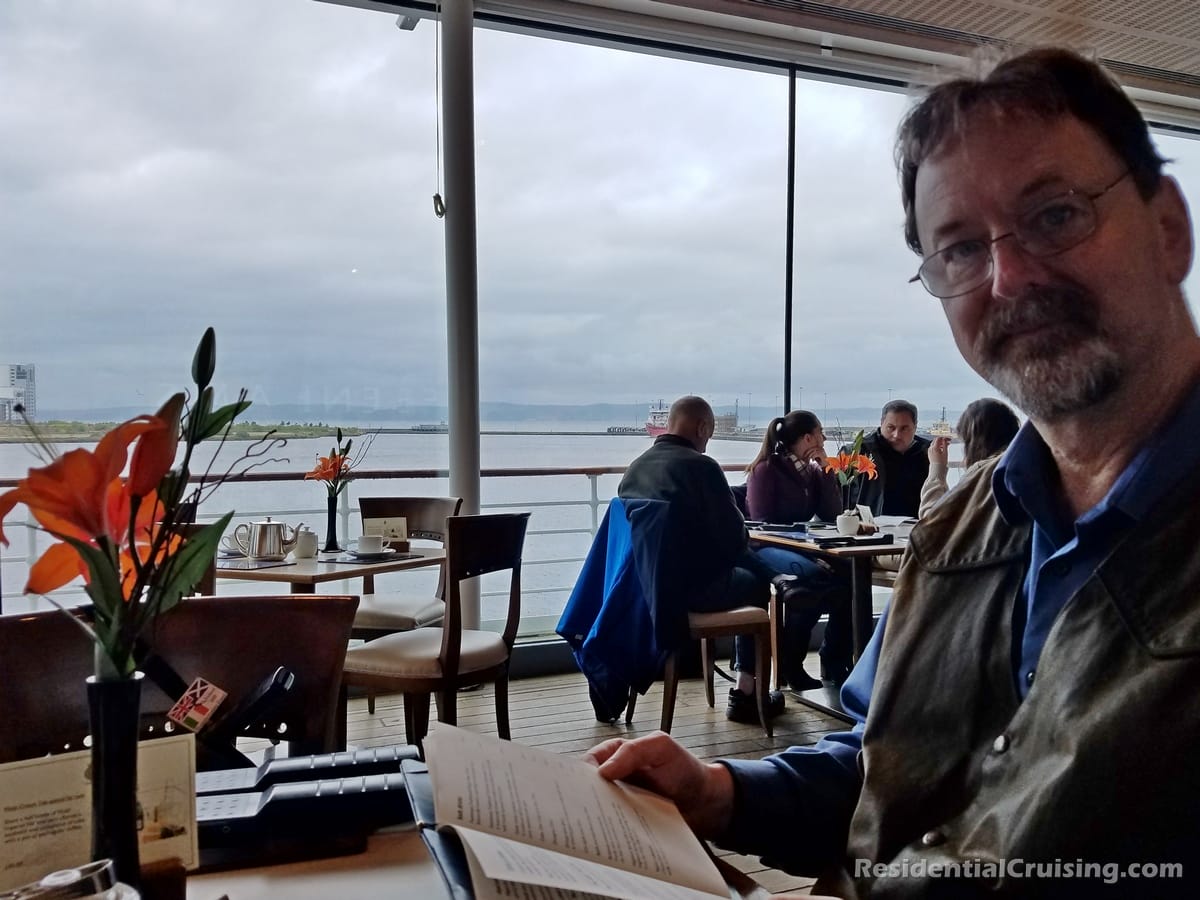
The tour concluded with a high tea unlike any high tea I’ve had. We enjoyed delicious scones, sandwiches, desserts, and tea all served by perfectly trained waiters. And we had views of Leith, Scotland, Edinburgh’s skyline, and the waters of the Firth of Forth as they reach the North Sea.
The Working Crew
I thought the high tea was the high point of the grand experience until I met one of the deck hands. I was intrigued to see this man polishing the brass handrails of the ship as if the queen would appear at any moment. Yes, the ship is decommissioned, but it’s still a working ship and, perhaps more importantly, it represents the royal family in a fundamental way to those 300,000 people each year.
As is usual, I struck up a conversation with him, asking the usual questions and being surprised by his responses. He had worked on that ship for twenty years and still loved the job. My brain wondered how you could love working on a yacht that didn’t go anywhere, and that the “lady of the house” never visited any longer. He must have intuited my pondering because he quickly added it is an honor to be part of the history. He expanded on that, saying, “We are all part of something rather larger than ourselves,” with a large smile on his face.
As I see the world from aboard the Villa Vie Odyssey, I think back to my brief afternoon on the Britannia. While we visit many ports that large cruise ships don’t have the joy of visiting, I’m realizing we are in a way similar to the Britannia’s diplomatic mission: we are also doing our own form of diplomacy, touching the populations in a slower, more deliberate way than cruise ships which only land for, typically, a few hours. We have two, sometimes even three days to connect with people. We have done humanitarian work after the earthquake in Cebu, Philippines, and a hurricane in Jamaica, donated clothing at numerous churches, and had leisurely meals at restaurants. It’s all because we have time to do it.
That directly ties in to my joy and the pride of the crew I see on the Odyssey, and it gives a different perspective. I can imagine the pride Britannia’s crew felt in supporting her guests and the history that was made in every port and on every sailing.
The Odyssey has crew who continuously polish, clean, and paint the ship inside and out. I was feeling a bit annoyed at some outside stairs I like to use that were closed “yet one more time” because crew was varnishing them. Then I remembered the joy that Britannia crewman had at polishing the brass “yet one more time” and realized that’s what it takes to maintain a ship: maintenance at sea is a constant battle against the elements and the wear and tear of constant use.
That led me to wonder if the Odyssey crew feels a similar pride. So, I asked one of the crew I saw in the hallway who was polishing brass and window sills.
Gratitude in the Small Things
The beaming pride I saw when I asked one of the crew members about his job answered my unasked question. He announced his joy and wished me a happy day. I briefly told him my story of the conversation with the deck hand on the Britannia, and noticed him nodding as I spoke. Without any prompting he said he loves his job, and said his work comes from the heart. I thanked him for his heart and he said that every time we see each other we can share joy and our hearts and continue with having happy days.
As the first Residential Cruising ship, I guess the Odyssey and its crew and residents are making their own history. That’s something to think about as we make our way around the world. More and more, the people we meet on excursions, even an hour away from port, have heard of us. Randy bought a hat on a side trip to Kuranda, in the mountains above Cairns, Qld., Australia. The vendor stopped to explain to Randy how to package the hat in our luggage “for your return home.”
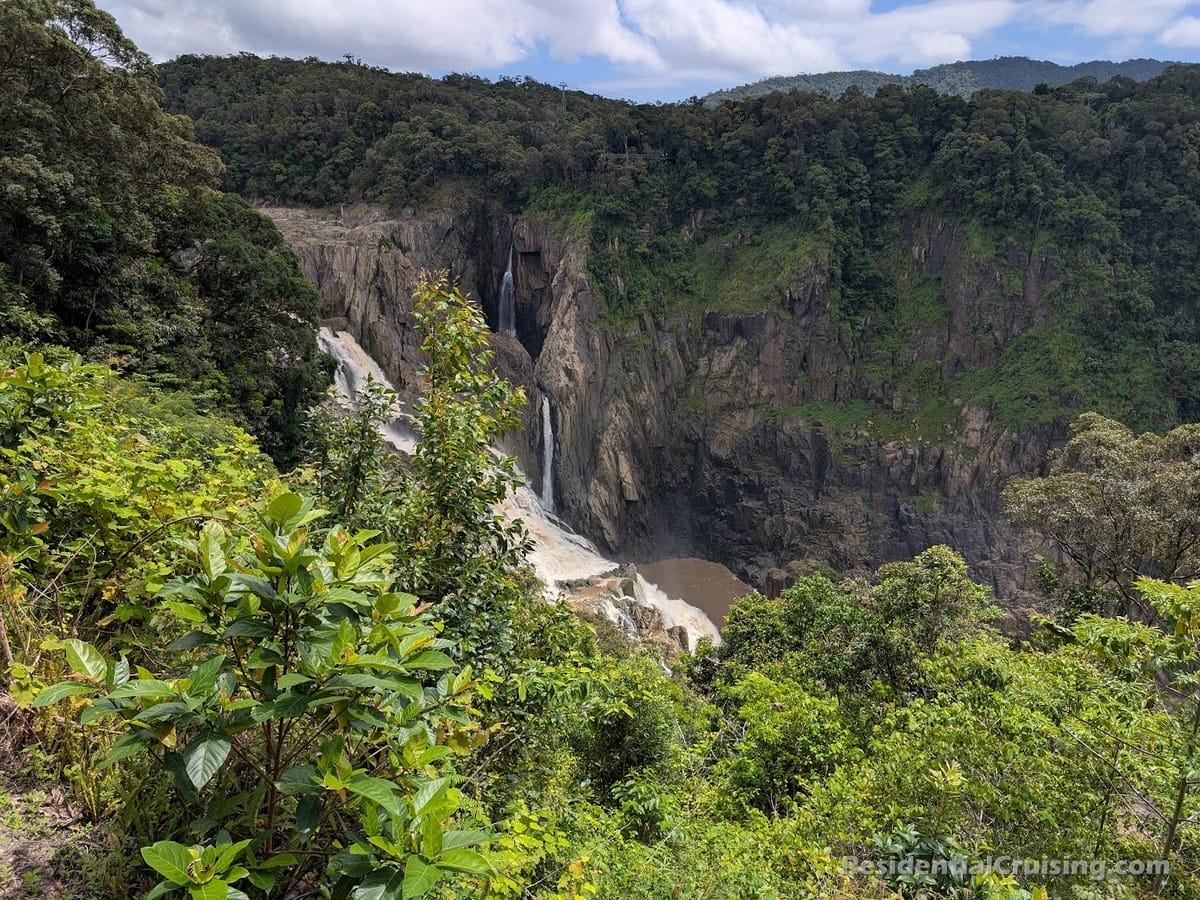
Randy smiled and said, “Our home is parked in the harbor in Cairns.” The man replied, “Oh, you’re on the Odyssey?” We were astounded that people are that aware of us, even when they don’t live near the docks. We’re having an impact on people at a personal level as we travel. That’s part of history at an individual level.
The Odyssey crew is also part of that history, just like the Britannia’s crew. While I have always thanked our crew for their work in keeping the ship clean and shiny, I have at times also been frustrated by the maintenance when it closes decks, pools, and stairways. Tying our maintenance efforts to my memory of being on the Britannia and seeing that beaming face, a face of pride and honor, brings it home in a very personal way. Thinking back to the queen’s yacht connects me to this experience and lifestyle, and profoundly deepens my gratitude.
Originally Published March 1, 2026 — Last Updated March 1, 2026- About the Author
- Latest Posts

I’m sure that, on most cruise ships, that pesky maintenance occurs in between trips so the paying passengers aren’t inconvenienced. You get to see it in action! It’s not unlike gutter cleaning or firebreak clearing at the former house, only someone else gets to do the work while you add a few steps and drink more iced tea.
I’m also certain that word gets around when you stop and talk to the crew, acknowledging their work and worth. We need more of that on land, too.
Marty, I’m sure there is a lot of maintenance that happens between trips. I also know they flip those ships so fast, like airplanes, that there isn’t time for much else but shuttling people off and back on. I think the maintenance is ongoing on larger ships. I haven’t been aware of it because I’m not all over those ships all the time as I am the Odyssey. The Odyssey is smaller too so easier to cover the various decks and rooms and see all that’s going on. Heck, most of the bigger ships are lacking promenade decks so traffic between exterior areas is diminished.
You’re right about word spreading. It’s a tight community with everyone appreciating everyone else.
The reality is there is no time “between trips” because the turnaround on a cruise ship is only hours, not days. Unload one set of passengers at 9AM and board the next set of passengers at 1PM. That time frame includes passengers, luggage, food and supplies, fuel etc. It is an impressive ballet to watch and I still enjoy it after over 20 cruises!
I’ve always been amazed and impressed by the community of those who cross water. You explained it in a insightful way.
Thank you, Stormy. I’m coming to see what a community it takes to tend to sea voyagers.
You mention that the “Villa Vie Odyssey” is the “first Residential Cruising ship”. I was under the impression that “MS The World” held that title.
Are you making a distinction between the two ships for some reason?
Bruce, I am making a distinction between the two ships. The World rejects the description of “residential cruise ship” because they don’t see themselves so much as a cruise ship but a yacht. AND, The World is not affordable by regular standards while the Odyssey is.
Bruce I am jealous because you have some fun blog posts to read by Randy explaining the difference. That MS world is private and invite only is what I recall his primary point was to exclude it.
Anyone can join the vvo. 😊
Wonderful article Kit; love the way you looked at it.
Thank you, JoLee.
Thank you so much for sharing, Kit! I learned a LONG time ago that telling people that they are doing a good job (when they are) goes a long way to making our world a little better place. Obviously you learned that also! I do that in our local library. The library personnel are often surprised and always appreciative.
I really enjoy following “vicariously” your and Arcie’s travels. Thank you for updating us.
Isn’t it interesting, George, how a little gratitude goes a long way for everyone concerned. I have my mother to thank for understanding the value of kindness and shared gratitude.
Thanks for joining us, even vicariously, on our travels and adventures. Maybe I should write about my glowworm night kayaking and my class-5 whitewater rafting adventures. Hhmmm….. 🙂
Kit, thanks for this. We just came back from a cruise in the Caribbean on the Sea Cloud Spirit — the third iteration of the original Sea Cloud that was given to Marjorie Merriweather Post, who received it as a birthday present in 1931. Her daughter, the actress Dina Merrill, has written about living on it for 9 months at a time. At the time it was the largest private sailing yacht in the world.
The ship we were on is larger (about 450 feet long? and with ca. 135 staterooms), but still a very special ship with lots of well-polished brass, teak, and mahogany—& 20-some sails. From the sailors who manually controlled the sails to the brass-polishers and those who prepared and served our food and drink, those who worked on the ship seemed to enjoy being there as well as providing us superb service. The difference is that they don’t get to build the relationships that you do by living onboard and being curious and caring. 😊
Oh, Kirsten! Your trip sounds magical. I wish we were closer so I could see your pictures and hear your stories directly. A sailing cruise would be interesting to experience. It sounds as if you were in the lap of luxury.
The relationships we build with fellow travellers — residents and crew — is what this lifestyle is all about for us. Our crew is grateful for our connections, something they didn’t experience on other ships.
Thanks for following us around the world. My best to you.
Thanks for the informative write-up. I greatly enjoyed it. When I was a high school teacher and coach, I made it a point to get to know all the support staff. Every now and then, one of them would do something for me and another teacher would ask how I got them to help me. They would then comment that they didn’t get such help. I’d ask if they knew anything about the person other than their name. When they replied in the negative, I’d reply, “You just answered your question, think about it.” I find it extremely satisfying to be grateful.
You’re on to something, Kemper. Thanks for your note and for following us.
I am certain that there are “terms” for that. I think one is “Karma,” and another “what goes around, comes around.” Now – if we could just get a few more people to recognize those skills?
I’ll second that idea, George.
Pay it forward may be another idea that comes out of this conversation.
Kemper, I’ve thought about your reply more. I appreciate people like you who acknowledge and friend the people who make our lives easier with their work and care.
My point was more about how some people work from the heart regardless of the acknowledgement of their service. They have pride in where they work and who they tend to. And the bonus for them is when people like you come into their lives.
That’s pretty cool. I once drove 16 hours overnight to a pedal moped meeting in Detroit. And a new friend Randy (RIP) insisted I take the country’s last working steam ferry back home from luddington.
Well that’s the closest I’ve been to a cruise. 4 hours of moonlight and calm Lake Michigan waters from my chair I snagged immediately to nap on at the front of the ship. I gave it up to some Amish folk and made fast friends.
There’s just something about the old ways of travel that everyone loves.
Your friend did you a great service. You captured the magic of slow travel in that experience and in the retelling of it. Bravo! I hope you will persue more slow travel along your path.